
Fill out the form above to download this report!
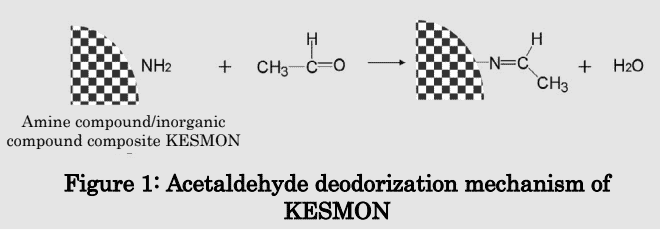
Indoor air quality has become an increasingly important public health concern due to the growing use of airtight construction methods and synthetic building materials in residential, commercial, and automotive environments. Among the various volatile organic compounds (VOCs) associated with indoor pollution, aldehydes such as formaldehyde and acetaldehyde are recognized as major contributors to sick building syndrome, causing symptoms including eye, nose, and throat irritation, headaches, and dizziness. As a result, governments and industries have implemented stricter guidelines and regulations aimed at reducing indoor aldehyde concentrations and improving occupant health. In addition to the use of low-emission materials, aldehyde deodorization technologies have emerged as an effective strategy for controlling airborne contaminants. To address this need, Toagosei developed KESMON, a novel aldehyde deodorant that combines amine-based reactive compounds with porous inorganic materials to achieve rapid and highly effective aldehyde removal. This paper presents the characteristics, deodorization mechanisms, performance, safety, and practical applications of KESMON, highlighting its potential for use in automotive interiors, building materials, air filtration systems, and other environments where aldehyde reduction is required.